GPS Tracking Laws by State: The Complete 2026 Guide
-
01
No federal law covers private GPS tracking, so each state sets its own rules.
-
02
Tracking a vehicle you own is generally safe. Tracking another adult without consent is not.
-
03
Consent rules differ: some states ask the owner, others every owner or occupant.
-
04
Employer notice rules are narrower than most guides claim.
-
05
Laws keep changing: Utah's update took effect September 1, and Ohio's follows October 6.
Last verified: [September 2026]
The tracker is still in the box when the doubt hits: do GPS tracking laws by state make this a bad idea where you live? Fair question. You are not overthinking it. The same device can be fine in one state and a crime in the next, depending on who you track.
I'm Ryan Horban, a GPS tracking specialist with 15+ years of hands-on experience helping vehicle owners, parents, and fleet managers choose and use trackers.
Below you get one table covering all 50 states and DC, explain whose consent each state counts, and clear up what employers must tell drivers. You will also see what changed in 2025 and 2026, how penalties work, and what to do if you find a tracker on your own car.
Read it before you install anything, and you will know exactly where you stand, state by state.
Track What's on Your Own Title
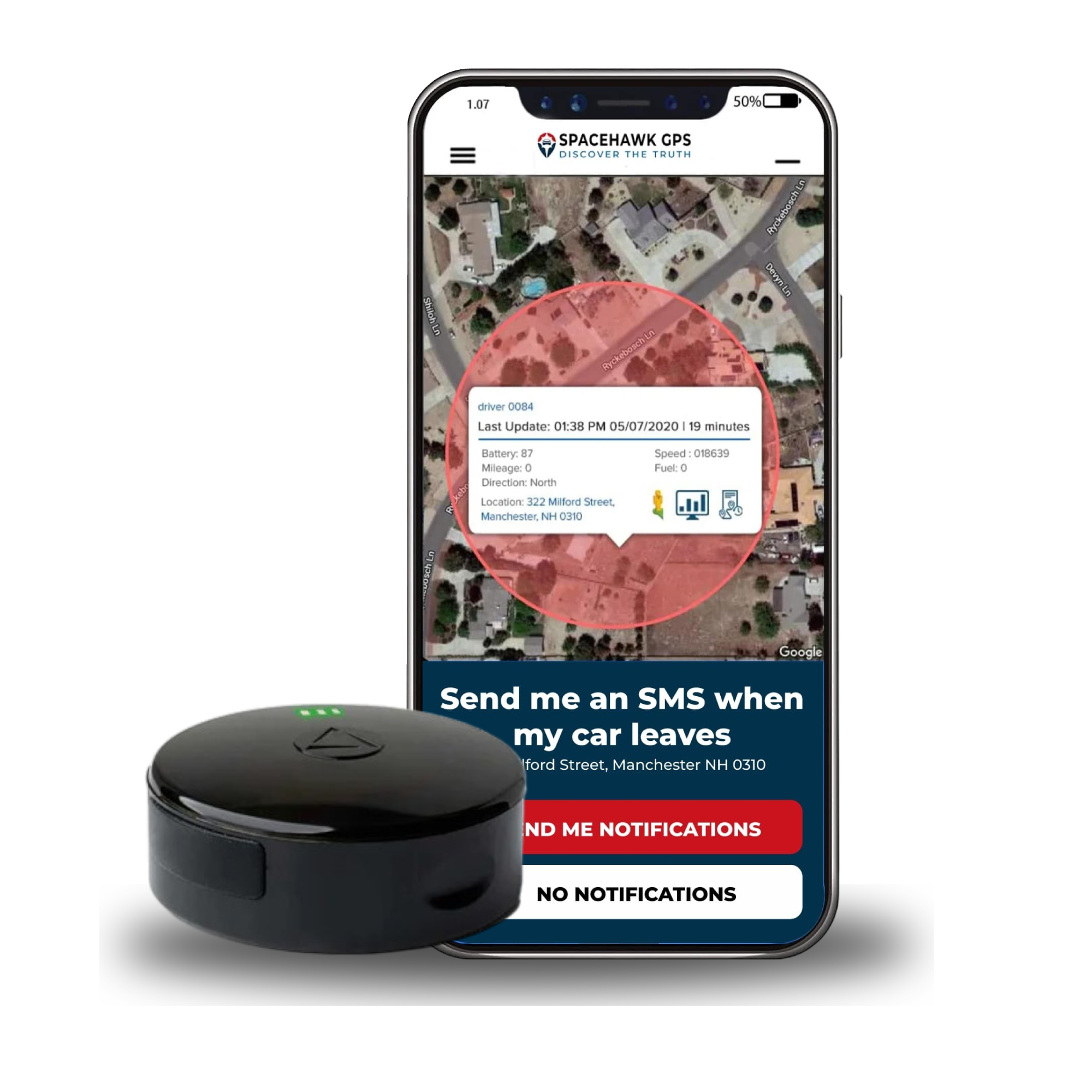
SpaceHawk gives you real-time location on the cars, vans, trailers, and equipment you own or lease. The magnet mount takes seconds, so there is no wiring and no installer.
- Updates every 3 seconds
- Hidden magnetic mount
- Waterproof
- One year warranty
- Free tech support
Only track a person with their consent.
Before the details, here is the short answer.
Is GPS Tracking Legal in the US?
Yes, when you track property you own, your minor child, or a company vehicle with disclosure. Tracking another adult or their vehicle without consent can be illegal in most states, and no federal law covers private tracking, so state law decides.
I'm Ryan Horban, and after 15+ years helping vehicle owners, parents, and fleet managers choose GPS trackers, the pattern holds: tracking property you own is generally legal everywhere, while tracking another adult or their vehicle without consent can be a crime in most states. Your state decides the details, so check the table below before you install. For vehicles on your own title, I recommend SpaceHawk from Tracking System Direct.
How Do GPS Tracking Laws Work in the United States?

Private GPS tracking has no single federal rule, so each state sets its own through four kinds of law: tracking-specific statutes, stalking laws that name tracking, civil claims, and employer notice rules.
Which kind applies depends on who owns the vehicle, who you are tracking, and why.
Start with the federal picture, which is shorter than most people expect.
Is There a Federal Law on GPS Tracking?
No federal statute governs private GPS tracking by individuals or most employers.
The closest thing is a court decision. In United States v. Jones (2012), the U.S. Supreme Court held that attaching a GPS device to a vehicle and monitoring its movements is a Fourth Amendment search. The ruling limits police, who generally need a warrant. The Court extended that logic in Carpenter v. United States (2018), holding that police need a warrant for historical cell-site location records. Private people, spouses, and employers fall outside both rulings.
Federal stalking law, 18 U.S.C. section 2261A, can apply when electronic monitoring is part of conduct meant to harass or intimidate. Separately, Federal Motor Carrier Safety Administration (FMCSA) rules require many commercial drivers to use electronic logging devices. That mandate covers hours of service, not general tracking. Fleet operators can read the full picture in What Is GPS Tracking Compliance for Commercial Fleets?
Federal silence tricks people into thinking tracking is unregulated, and that is wrong. States regulate it, one statute at a time.
States fill that gap in four different ways.
What Are the Four Types of State GPS Tracking Laws?
States use tracking-specific statutes, stalking laws that name GPS or tracking, civil claims, and employer notice rules.
NCSL (National Conference of State Legislatures) keeps a state list of these laws, and the same groups show up across it:
- Tracking-specific statutes ban placing or using a tracker without the right consent, often without proof of threats. Florida, Ohio, Texas, Virginia, and Utah are examples.
- Stalking laws that name tracking treat GPS as part of a pattern of conduct that causes fear or distress. New York, Arizona, and Connecticut work this way.
- Civil claims let the person tracked sue, sometimes for set damages. Utah's law is a clear example.
- Employer notice rules require written notice before tracking employees. New Jersey is the confirmed vehicle-tracking example.
Tracking-specific laws can apply without a threat pattern. Stalking laws usually need a course of conduct, intent, and fear or distress. Either way, a stalking-based label never means other tracking is allowed.
With the four types in mind, the next question is practical: who can you track in real life?
Who Can Legally Track Whom? Rules by Situation

Most people asking this are worried, not malicious: a parent with a new driver, a spouse with doubts, a manager with a missing truck. Legality still comes down to three facts: who owns the vehicle, who is being tracked, and who agreed.
Take the situations one at a time, starting with the simplest.
Can You Legally Track a Vehicle You Own?
Generally yes. Tracking a car, truck, or trailer titled to you is lawful in nearly every state, with a few conditions.
Florida and Utah write this exception for owners and lessees directly. The conditions come from the edges: co-owners, leased vehicles, and protective orders. Ohio and Indiana remove the ownership exception when the owner is the subject of a protective order and the vehicle is likely used by the person who got the order.
One practical tip most guides skip: take the tracker off before you sell the vehicle or return a lease. Florida and Ohio both expect removal before the title transfers or the lease ends, unless the new owner or lessor agrees in writing to leave it.
Ownership covers your own vehicles. Your child's car is a different question.
Can You Track Your Child's Car or Phone?
Yes. Parents and legal guardians can generally track a minor child, but several states attach conditions.
Florida and Ohio tie the exception to marital status and custody. Married parents living together need one parent's consent. Sole custodians and sole surviving parents can act alone. Divorced or separated parents in Florida need both parents to agree.
Ohio adds a middle path. When only one divorced parent agrees, that parent may track only during their own parenting time and must turn the tracker off or remove it during the other parent's time.
Kentucky's exception covers a vehicle the parent owns or leases and the minor drives. Utah requires permission from any other parent or guardian.
Adulthood changes the rules. Once your child turns 18, ask first, because an adult child keeps full privacy rights. Utah lets a former parent continue only until the young adult says no.
Family questions get harder when a marriage is involved.
Is It Legal for a Husband or Wife to Track a Spouse's Car?
Not automatically. Marriage is not permission; the vehicle's title and your spouse's consent decide.
If you are both on the title, you are an owner, and most vehicle statutes protect owners. If the car is in your spouse's name alone, secretly placing a tracker can break the law in states such as Texas, Kentucky, Utah, and Oregon.
Consent can also end. Florida presumes consent is revoked when either spouse files for divorce or a protective injunction. Ohio does the same and gives 72 hours to remove the device.
Stalking laws add another layer. Pennsylvania has no tracking-specific statute, yet prosecutors have charged people under its stalking law for placing trackers on partners' cars.
Worried about a partner's safety or a custody dispute? Call a family lawyer before you buy a tracker. My advice is blunt: if you have to hide it, you probably need a lawyer, not a tracker.
Know Your Rights
No tracking statute, still a stalking charge. See how Pennsylvania prosecutors handled hidden trackers: GPS Tracking Laws Pennsylvania
Spouses are not the only adults people want to track.
Can You Track an Aging Parent or Adult Family Member?
Only with consent or legal authority, such as guardianship. Some states also require a doctor's sign-off for caregivers.
Florida and Ohio let a caregiver track an elderly person or disabled adult only when the treating physician certifies that the tracker is necessary for their safety. Virginia lets a legally authorized representative of a vulnerable adult track them, and Utah covers caregivers of vulnerable adults. Indiana exempts tracking a family member unless a protective order applies.
Ask first whenever you can. When you cannot, keep the paperwork that shows your authority.
Some people hire help instead of tracking themselves.
Can a Private Investigator Track a Vehicle?
Only under narrow conditions, and a license alone is never enough.
Ohio requires the vehicle owner's consent and a listed investigative purpose. The exception disappears when the client is under a protection order or the investigator knows the work supports a crime. Virginia sets a similar rule for registered investigators.
Texas gives licensed investigators an affirmative defense only with written consent from the owner or lessee, plus written permission to enter private property when needed, or with a court order. Florida's business exception does not automatically cover investigators working for someone else.
Employee-driven vehicles raise their own rules, covered in the employer section below. First, the table.
GPS Tracking Laws by State: 50-State Comparison Table
The table lists all 50 states and DC with the main law, the law type, whose consent counts, and the penalty where confirmed.
Read the legend first, then jump to your state.
How to Read This Table
The "Law type" column names which of the four kinds of law applies in that state: Tracking-specific (a statute written for trackers), Stalking (a stalking law that covers tracking), Civil claim (the person tracked can sue), or Employer notice (written notice before tracking staff).
"Whose consent counts" shows who must agree. Stalking laws also require proof of intent and harm, so a consent answer there is only part of the test. "Penalty and notes" stays short on purpose, and the statute has the full detail.
Jump to your state with the buttons below. On a phone, swipe the table sideways.
Jump to your state
| State | Main law | Law type | Whose consent counts | Penalty and notes |
|---|---|---|---|---|
| Alabama | Ala. Code 13A-6-95 and 13A-6-96 (electronic stalking) | Tracking-specific | Owner of the property | Second degree: Class A misdemeanor. First degree (intent to surveil, stalk, or harass): Class C felony, or Class B felony if it breaks a protection order. |
| Alaska | AS 11.41.270 (stalking includes GPS monitoring) | Stalking | The person tracked | Depends on the stalking degree. |
| Arizona | A.R.S. 13-2923 (stalking by electronic or GPS surveillance) | Stalking | The person tracked | Depends on the stalking offense. Surveillance lasting 12 hours or more, or on two or more occasions, can count. |
| Arkansas | Ark. Code 5-71-229 (stalking) | Stalking | The person tracked | Depends on the stalking degree. |
| California | Cal. Penal Code 637.7 | Tracking-specific | Registered owner, lessor, or lessee of the vehicle | Misdemeanor. Lawful law enforcement use is exempt. |
| Colorado | C.R.S. 18-3-602 (stalking; "surveillance" includes electronic monitoring of a person's movements) and C.R.S. 13-20-1301 (2024 civil claim) | Stalking Civil claim | The person tracked; under the civil claim, consent can be withdrawn | Stalking: Class 5 felony for a first offense, Class 4 felony for a repeat offense within 7 years or with a protection order. The civil claim is for damages. |
| Connecticut | Conn. Gen. Stat. 53a-181f (electronic stalking) | Stalking | Intent to harass or intimidate, plus fear or distress | Class D felony. The workplace notice law (31-48d) covers premises monitoring, not vehicle GPS. |
| Delaware | 11 Del. C. 1335(a)(8) | Tracking-specific | Registered owner, lessor, or lessee of the vehicle | Parents of minors and law enforcement are exempt. |
| District of Columbia | D.C. Code 22-3132 (stalking) | Stalking | The person tracked | Depends on the stalking offense. |
| Florida | Fla. Stat. 934.425 | Tracking-specific | The property owner; consent is presumed revoked after a divorce petition or protective injunction | Third-degree felony; second-degree felony if used to commit a dangerous crime. Covers tracking apps. |
| Georgia | Ga. Code 16-11-62(8) | Tracking-specific (narrow) | Vehicle owner or lessee, in protective-order cases | Narrow rule tied to a protective order; other tracking can still fall under stalking laws. |
| Hawaii | Haw. Rev. Stat. 803-42 | Tracking-specific | The owner of the property carrying the device, or a court order | Felony. |
| Idaho | Idaho Code 18-7906 (stalking by electronic surveillance) | Stalking | The person tracked | Misdemeanor for second-degree stalking. |
| Illinois | 720 ILCS 5/21-2.5 and 5/12-7.3 | Tracking-specific Stalking | Registered owner, lessor, or lessee | Class A misdemeanor. Fleet and telematics exceptions apply. |
| Indiana | Ind. Code 35-46-8.5-1 | Tracking-specific | The person's knowledge or consent (covers property owned or used by them) | Class A misdemeanor; Level 6 felony with a prior conviction or protective order. Family and ownership exceptions end with a protective order. |
| Iowa | Iowa Code 708.11 (stalking with a GPS device) | Stalking | The person tracked | Depends on the stalking offense. |
| Kansas | K.S.A. 21-5427 (stalking by electronic tracking) | Stalking | The person tracked | Depends on the stalking offense. |
| Kentucky | KRS 508.152 | Tracking-specific | The owner, or the lessee or authorized operator if the vehicle is leased | Class A misdemeanor. Effective June 29, 2023. A parent may track a vehicle the parent owns or leases and the minor drives. |
| Louisiana | La. R.S. 14:323 | Tracking-specific | The person tracked | Exceptions for fleet owners and parents. |
| Maine | 17-A M.R.S. 210-A (stalking) | Stalking | The person tracked | Depends on the stalking offense. |
| Maryland | Md. Code, Crim. Law 3-802 (stalking) | Stalking | The person tracked | Depends on the stalking offense. Covers a device that pinpoints location without knowledge or consent. |
| Massachusetts | M.G.L. c. 265, sections 43 and 43A (stalking, criminal harassment) | Stalking | The person tracked | No tracking-specific statute; repeated tracking can support these charges. |
| Michigan | MCL 750.539l | Tracking-specific | The vehicle owner, or the lessee if leased | Misdemeanor. Parent exception applies. |
| Minnesota | Minn. Stat. 626A.35 | Tracking-specific | A court order, unless the owner of the tracked object installs it or agrees | Misdemeanor. |
| Mississippi | Miss. Code 97-3-107 (stalking) | Stalking | The person tracked | No tracking-specific statute. |
| Missouri | Mo. Rev. Stat. 565.227 (stalking); a vehicle-tracking offense is scheduled for July 1, 2027 | Stalking | The person tracked | Check which version is in force on your date. |
| Montana | Mont. Code 45-5-220 (stalking; monitoring includes GPS) | Stalking | The person tracked | Depends on the stalking offense. |
| Nebraska | Stalking and harassment statutes | Stalking | The person tracked | Check the current statute; stalking and harassment laws can apply to tracking. |
| Nevada | NRS 200.930 | Tracking-specific | The owner or lessor of the vehicle | Misdemeanor for a first offense, gross misdemeanor for a second, category C felony for a third or later. |
| New Hampshire | RSA 644-A:4 | Tracking-specific | The person whose body or property carries the device | Civil action available. |
| New Jersey | N.J.S.A. 2C:12-10 (stalking); N.J.S.A. 34:6B-22 (employer notice) | Stalking Employer notice | Employers must give written notice; consent is not required | Employer civil penalty up to $1,000 for a first violation and $2,500 for later ones. |
| New Mexico | N.M. Stat. 30-3A-3 (stalking) | Stalking | The person tracked | Depends on the stalking offense. |
| New York | N.Y. Penal Law 120.45 (stalking, fourth degree; tracking counts as following) | Stalking | The person tracked | Class B misdemeanor. The workplace notice law (Civil Rights Law 52-c) covers phone, email, and internet, not GPS. |
| North Carolina | N.C. Gen. Stat. 14-196.3(b)(5) | Tracking-specific | The person tracked | Class 2 misdemeanor. Exceptions include fleet, parental, and employer devices. |
| North Dakota | N.D.C.C. 12.1-17-07.1 (stalking) | Stalking | The person tracked | Covers unauthorized GPS tracking that frightens or harasses. |
| Ohio | R.C. 2903.216 | Tracking-specific | The property owner; a divorce filing or protection order revokes consent (72 hours to remove the device) | First-degree misdemeanor; fourth-degree felony with aggravating factors. Covers tracking apps. Amended effective October 6, 2026. |
| Oklahoma | 21 O.S. 1173 (stalking; "following" includes GPS) | Stalking | The person tracked | Lawful dealer and creditor use is excepted with written consent. |
| Oregon | ORS 163.715 | Tracking-specific | The vehicle's owner | Class A misdemeanor. The wording covers GPS devices on motor vehicles. |
| Pennsylvania | 18 Pa.C.S. 2709.1 (stalking); no tracking-specific statute | Stalking | The person tracked | Prosecutions have used stalking law; House Bill 407 would add a specific offense. See the TSD Pennsylvania guide. |
| Rhode Island | R.I. Gen. Laws 11-69-1 | Tracking-specific | The operator and all occupants | Exceptions for some employers and fleets. |
| South Carolina | S.C. Code 16-3-1700 (stalking) | Stalking | The person tracked | No tracking-specific statute. |
| South Dakota | SDCL 22-19A-1 (stalking) | Stalking | The person tracked | No tracking-specific statute. |
| Tennessee | Tenn. Code 39-13-606 | Tracking-specific | The vehicle owner (confirm whether every owner must agree) | Class A misdemeanor. |
| Texas | Tex. Penal Code 16.06 | Tracking-specific | The owner or lessee (consent is an affirmative defense) | Class A misdemeanor. Licensed investigators need written consent or a court order. |
| Utah | Utah Code 76-12-305 (effective September 1, 2026) | Tracking-specific Civil claim | The owner or lessee for vehicles; the individual for bodies, belongings, and apps | Class A misdemeanor, plus civil damages of $50 a day or $5,000, whichever is greater. |
| Vermont | 13 V.S.A. 1061 and 1062 (stalking) | Stalking | The person tracked | No tracking-specific statute. |
| Virginia | Va. Code 18.2-60.5 | Tracking-specific | Consent; the offense requires deceptive installation | Class 1 misdemeanor. Fleet owners and parents of minors are exempt. |
| Washington | RCW 9A.46.110 (stalking; includes installing or monitoring a tracker) | Stalking | The person tracked | Depends on the stalking offense. |
| West Virginia | W. Va. Code 61-2-9a (stalking) | Stalking | The person tracked | Depends on the stalking offense. |
| Wisconsin | Wis. Stat. 940.315 | Tracking-specific | The owner or lessee of the vehicle | Class A misdemeanor. |
| Wyoming | Wyo. Stat. 6-2-506 (stalking; GPS surveillance) | Stalking | The person tracked | Depends on the stalking offense. |
Treat the table as a research summary, not legal advice. Statutes change and exceptions are condensed, so read the current text for your state before you act.
Some rows need more than one label.
Where One Label Can Mislead
Five rows deserve a second look, because a single label hides what actually happens:
- Pennsylvania has no tracking-specific statute, but stalking charges over tracking devices have already been filed.
- Utah's 2026 rewrite combines a criminal offense and a civil claim, and it now covers trackers on people, belongings, and phone apps.
- Ohio's section is changing again on October 6, 2026.
- Georgia's tracking rule is narrow and tied to protective orders.
- Colorado reaches tracking through its stalking law, with a separate 2024 civil claim.
"No tracking statute" never means "legal."
Labels aside, the biggest source of mistakes is consent.
Whose Consent Counts? Owner, Every Owner, or the Person Tracked

Think of tracker consent like a title check at a dealership: the name on the paperwork matters more than who drives the car. Statutes disagree about whose name that is, and assuming owner consent is enough is a common way to get it wrong.
Four patterns cover most states, followed by a quick guide to the words statutes use.
When Vehicle-Owner Consent Is Enough
Many vehicle statutes key on the owner. Delaware names the registered owner, lessor, or lessee. Oregon names the owner of the vehicle. Texas treats effective consent from the owner or lessee as an affirmative defense. Utah asks for permission from the owner or lessee.
Kentucky adds a twist: when the vehicle is leased, the lessee or authorized operator is the one whose knowledge and consent count.
Statutes rarely say what happens with co-owners. Assume you need to ask each one.
Owner consent is the simple case. Some states want more people to agree.
When Every Owner or Occupant Must Agree
Rhode Island requires consent from the operator and all occupants when the purpose is monitoring or following them.
Parental rules work the same way in some states. Florida requires both divorced or separated parents to agree before tracking a minor child, and Ohio's both-parents branch works the same way.
Rules like these protect the person who is easy to forget: the passenger, the other parent, or the co-owner who is not on the account.
Another group of states ignores vehicles and looks at the person.
When the Tracked Person's Consent Decides
California, Louisiana, and New Hampshire frame the rule around the person whose movement or property is tracked. Virginia asks whether the person agreed, though its offense requires intentionally deceptive installation. Florida and Ohio focus on the property owner's consent, and Utah protects the individual for bodies, belongings, and phone apps.
Consent also has an expiry date in several states.
When a Divorce Filing or Protective Order Cancels Consent
Ohio presumes consent is revoked once a divorce complaint or protection order is served. The person who installed the tracker then has 72 hours to remove it or tell the court why they cannot.
Florida presumes revocation when either spouse files for dissolution of marriage or an injunction for protection. Utah makes continued tracking after known revocation an offense.
Sharing a tracker, a family plan, or a car with a spouse? Treat any divorce filing or protection order as the moment to switch tracking off.
Statutes also use three different words for agreement, and the difference matters.
Consent, Knowledge, or Notice: What Is the Difference?
Consent means the person agrees. Knowledge means they know the tracker exists. Notice means you told them, and the law may not require their agreement at all.
Statutes pick different words. Virginia's offense turns on consent and deceptive installation. Indiana protects a person's knowledge or consent. New Jersey asks employers for written notice, and the employee's consent is not required. Texas treats effective consent from the owner or lessee as an affirmative defense.
The three terms stack like this:
-
Consent
The person agrees, ideally in writing.
-
Knowledge
The person knows about the tracker, even if they never agreed.
-
Notice
You told them, which can satisfy an employer notice rule but not a consent rule.
When in doubt, do all three: tell the person, ask for agreement, and write it down.
Laws on consent keep moving, so the next section covers what changed.
What Changed in GPS Tracking Laws by State in 2025 and 2026?
Utah rewrote its law on September 1, 2026, and Ohio changes its law again on October 6. Any summary older than this month is already out of date, and many guides still repeat the old rules.
Begin with the changes already in force.
New Laws Already in Effect
Ohio's R.C. 2903.216 took effect March 20, 2025, through Senate Bill 100. The law covers tracking devices and tracking applications, and ends consent after a divorce filing or protection order.
Utah's rewrite, passed in the 2026 General Session, took effect September 1, 2026. The statute now reaches trackers on a person's body, belongings, and phone apps, not only vehicles, and it adds a civil claim with statutory damages.
Florida amended its tracking statute in 2024 and again in 2025, according to the history line on the Florida Senate's statute page. Kentucky's law took effect June 29, 2023, and Alabama passed its electronic stalking provisions the same year.
More changes are already scheduled.
Bills and Changes to Watch
Ohio's Senate Bill 315 amends the same section effective October 6, 2026.
Pennsylvania's House Bill 407 would add a tracking-specific stalking offense. The House passed it on April 8, 2025 and sent it to the Senate Judiciary Committee. Check the bill page for its current status.
Missouri has a vehicle-tracking offense scheduled to take effect July 1, 2027.
Laws move faster than most guides do. The "Last verified" date near the top of this page shows when the table was last checked.
Hardware matters too, because not every tracker is a GPS unit.
AirTags, Bluetooth Trackers, and State GPS Tracking Laws

Does the law care whether a tracker runs on GPS or Bluetooth? Usually not, but the exact statute wording can change the answer.
Readers ask one thing first: does an AirTag count?
Are Apple AirTags Covered by State Tracking Laws?
Often yes. Many statutes say "tracking device" without limiting it to GPS, and stalking laws cover the conduct whatever the hardware.
Ohio defines a tracking device as an electronic or mechanical device that lets someone remotely track another person or their property, and it separately covers tracking applications. Alabama's definition covers any device that permits tracking the movement of a person or object. Florida focuses on devices whose primary purpose is to reveal their location.
Courts have not settled every edge case, especially for multipurpose devices. Treating a Bluetooth tag like a GPS tracker is the safe call.
Wording is the whole story here.
Why Statute Wording Decides the Answer
Compare three phrasings. Florida covers a device whose primary purpose is to reveal its location by electronic signals. Ohio and Utah add software, so a tracking app on a phone can trigger the law. Oregon's statute speaks of a global positioning system device affixed to a motor vehicle, which is narrower.
Utah also excludes location technology installed by a vehicle manufacturer or dealer when the data is anonymized.
No single definition fits every state, so ask for consent whatever the device is.
Next up is the group that asks the most questions about notice: employers.
Employer GPS Tracking Laws and Written Notice Rules

Employers hear that many states require notice before vehicle tracking. After checking the statutes behind that claim, only one clearly does, and the others people cite cover something else.
Employer rules get a short section here, because the full topic lives in our employee tracking guide.
Which States Require Written Notice for Vehicle Tracking?
New Jersey. Under N.J.S.A. 34:6B-22, employers must give written notice before they knowingly use a tracking device in a vehicle an employee uses. The law took effect April 18, 2022.
The rule applies to any vehicle an employee uses. Civil penalties are capped at $1,000 for a first violation and $2,500 for each later one, and the Commissioner of Labor and Workforce Development collects them. Government bodies and public transportation systems are exempt.
Other states often get lumped in, so check what their laws actually say.
What Do New York, Connecticut, and Delaware Actually Require?
They require notice for general electronic monitoring, not for vehicle GPS.
New York Civil Rights Law section 52-c requires written notice at hiring when an employer monitors telephone, email, or internet use. The attorney general can enforce it, with civil penalties of $500, $1,000, and $3,000 for first, second, and later offenses. The text does not mention GPS.
Connecticut's section 31-48d covers electronic monitoring of employees' activities or communications on the employer's premises, and posting a notice satisfies it, according to the Connecticut Department of Labor. Delaware's 19 Del. C. section 705 is a notice rule for telephone, email, and internet monitoring.
None of the three names vehicle tracking. Still, written notice costs nothing and ends arguments before they start.
Multi-state fleets face a different problem: several rules at once.
How Should Multi-State Fleets Handle Different Rules?
Follow the strictest rule that applies where your drivers work, and give written notice everywhere.
Suppose your trucks deliver into New Jersey. Its notice rule applies to the drivers there, even if your home state has no tracking rule. One written policy, signed by every driver, covers that case and most others.
Keep tracking to work hours where you can, and get written consent before tracking any personal vehicle. Commercial carriers also follow FMCSA's electronic logging rules for hours of service.
Stay Compliant
Building a policy? Read What Is Employee GPS Tracking & Is It Legal? (2026 Guide)
Good notices stay short and specific.
What Should a Written Tracking Notice Include?
Five items cover the notice itself:
-
01
What the tracker records, such as location, speed, and trip history.
-
02
When tracking runs, including whether it stops after work hours.
-
03
Who can see the data and how long you keep it.
-
04
The business reason, such as dispatch, safety, or theft recovery.
-
05
Space for the driver's signature and date.
Keep a signed copy on file for every driver.

Compliance gets easier when you know what a violation costs.
Penalties for Illegal GPS Tracking by State

Florida makes illegal tracking a third-degree felony. Texas and Kentucky stop at a Class A misdemeanor. The facts and any protective order matter as much as the label.
The statutes set the range, so start with what they say.
What Is the Penalty for Illegal GPS Tracking?
Illegal tracking is usually a misdemeanor and can be a felony, with jail, fines, and a criminal record on the table. Examples from statutes checked for this guide:
- Ohio: first-degree misdemeanor, or fourth-degree felony with a prior conviction, a protection order, or a history of violence.
- Florida: third-degree felony, or second-degree felony if the tracker is used to commit a dangerous crime.
- Alabama: Class A misdemeanor for second-degree electronic stalking, Class C felony for first degree, and Class B felony if a protection order is broken.
- Utah: Class A misdemeanor, plus a civil claim.
- Virginia: Class 1 misdemeanor, but only when the tracker is installed through intentionally deceptive means.
- Texas: Class A misdemeanor.
- Kentucky: Class A misdemeanor.
- Connecticut: Class D felony for electronic stalking. Older sources list a lower class, so check the current statute.
Maximum jail time and fines differ by state, so read your state's row and the statute itself.
Criminal charges are only half the story.
Can You Sue Someone for Putting a Tracker on Your Car?
In many states, yes. Some write a specific civil claim, and others let you sue for invasion of privacy.
Utah is the clearest example. Anyone injured by a violation can seek an injunction, attorney fees, and either compensatory damages or statutory damages of $50 a day or $5,000, whichever is greater. Even a not-guilty verdict in the criminal case does not block the civil claim.
Talk to an attorney in your state about your facts. Keep photos, phone alerts, and the date you found the device.
Some cases reach beyond one state.
When Does GPS Tracking Become a Federal Crime?
When it meets the conditions of federal stalking law, 18 U.S.C. section 2261A. Federal prosecutors can use it when electronic monitoring is part of a course of conduct meant to harass or intimidate and it causes fear or serious distress.
For everyday disputes, your state's law is the one to check first.
Some readers come to this topic from the other side: they found a tracker.
What to Do If You Find a GPS Tracker on Your Car

Finding a device you did not place is frightening. Move carefully, protect yourself first, and keep evidence.
The first moves matter most.
What Are the First Steps After Finding a Tracker?
Do not confront anyone. Then work through five steps:
-
01
Photograph the tracker where you found it.
-
02
Screenshot any phone alerts about an unknown tracker.
-
03
Write down the date, time, and place.
-
04
Contact local police so they can document and remove it.
-
05
Ask a domestic violence advocate or attorney about a protective order if you suspect who placed it.

Many people ask the next question right away.
Is It Safe to Remove a Tracker Yourself?
If you feel unsafe, involve police first. Removing a device can alert the person monitoring it.
On a car you own, and when you feel safe, removal is generally lawful. Leased or employer-owned devices may carry contract rules, so check your lease or policy before pulling anything.
You do not have to handle this alone.
Where Can You Get Help If You Are Being Tracked?
The National Domestic Violence Hotline answers at 1-800-799-7233. The Stalking Prevention, Awareness, and Resource Center offers guidance for people who are being stalked. WomensLaw.org, a project of the National Network to End Domestic Violence, explains stalking, technology abuse, and restraining orders state by state.
In immediate danger, call 911.
Buyer's Guide
Compare detectors: 7 Best GPS And Spy Camera Detectors: Top Picks 2026
Now the practical side for people who want to track the right way.
How to Track Legally: 6-Step Checklist Before You Install
Six steps keep legal tracking legal. Work through them in order before any install:
-
01
Confirm who is on the title or lease.
-
02
Find your state's row and check its law type.
-
03
Get written consent wherever another adult or owner is involved.
-
04
Give employees written notice before tracking starts.
-
05
Write down the purpose, who sees the data, and how long you keep it.
-
06
Recheck the law's date, and call an attorney if your situation is unusual.
For vehicles on your own title, SpaceHawk covers the install itself: a magnet mount, no wiring, no installer. I would not recommend it, or any tracker, for following another adult without agreement.
Step-by-Step Guide
Prefer a hardwired unit? Follow GPS Tracker Installation: Hardwire Guide 2026
Most trouble comes from skipping one of these steps.
Common Mistakes That Turn Legal Tracking Into a Charge
Five mistakes cause most of the legal trouble in this area:
- Assuming marriage equals ownership. A divorce filing can cancel consent in Ohio and Florida.
- Treating "no statute" as "legal." Pennsylvania cases were brought under stalking law.
- Tracking an adult child's car. Adults keep full privacy rights, even inside the family.
- Tracking an employee's personal vehicle. Get written consent, and remember New Jersey's notice rule.
- Trusting outdated summaries. Several guides still call Ohio a no-law state, and Utah's law changed on September 1.
Honestly, the pattern behind all five is the same: people check one fact (who bought it, who is married to whom) and skip the one that matters (who agreed).
Disclaimer: Everything in this guide is general information, not legal advice. GPS tracking laws change and can apply differently depending on the facts. Consult a licensed attorney in your state before placing a device on any vehicle you do not own outright.
Final Takeaway
Most GPS tracking trouble starts with a shortcut, not a bad intention. Someone assumes the law is the same everywhere, or that a missing statute means permission.
GPS tracking laws by state differ in ways that matter: who must consent, when consent ends, and what a violation costs. The safest path stays the same in every row of the table. Track what you own, ask before you track anyone else, and write it down.
After 15+ years in this business, my rule has not changed.
Put the tracker in the box on a car, truck, or trailer with your name on the title, and let the table answer the rest.
Put It on a Vehicle You Own
The tracker in the box belongs on a car, truck, or trailer with your name on the title. SpaceHawk mounts with a magnet and shows location in real time.
- Updates every 3 seconds
- Hidden magnetic mount
- Waterproof
- One year warranty
- Free tech support
Sources and official statute links
- National Conference of State Legislatures: Private Use of Location Tracking Devices, State Statutes
- U.S. Supreme Court: United States v. Jones, 565 U.S. 400 (2012)
- Cornell Law School Legal Information Institute: 18 U.S.C. section 2261A
- U.S. Supreme Court: Carpenter v. United States (2018)
- Federal Motor Carrier Safety Administration: Electronic Logging Devices
- Ohio Revised Code 2903.216
- Florida Statutes 934.425
- Texas Penal Code 16.06
- Virginia Code 18.2-60.5
- Kentucky Revised Statutes 508.152
- Alabama HB 153, 2023
- Utah Code 76-12-305
- New York Civil Rights Law 52-c
- Connecticut Department of Labor: Electronic Monitoring notice
- New Jersey Legislature: N.J.S.A. 34:6B-22, P.L. 2021, c. 449
- Pennsylvania General Assembly: House Bill 407
- National Domestic Violence Hotline
- Stalking Prevention, Awareness, and Resource Center
- WomensLaw.org, a project of the National Network to End Domestic Violence
About the Author


 Buy on Amazon